Aakash Chawade
Professor & Chair
Division of Plant Breeding Methodology
University of Göttingen, Germany
Chawade Lab
We develop and evaluate statistical, computational, and technological frameworks that increase the efficiency, precision, and sustainability of plant breeding programs across crops, environments, and resource settings.
Our research integrates quantitative genetics, high-throughput phenotyping, breeding simulation, and artificial intelligence to link genetics and phenotypic information with breeding decisions. We focus on methods that improve the accuracy, scalability, and interpretability of selection in breeding programs.
We develop statistical and genomic approaches for the analysis of complex traits, estimation of genetic parameters, and prediction of breeding values across populations, environments, and breeding stages.
We develop methods for the design, processing, and interpretation of phenotypic data from controlled environments and field trials, with emphasis on measurement precision, scalability, and biological relevance.
We use simulation frameworks to evaluate breeding strategies, optimize resource allocation, and assess the long-term consequences of alternative selection and breeding designs.
We develop machine-learning and data-integration approaches that combine genomic, phenotypic, environmental, and management data to support interpretable breeding decisions.
We integrate methodological innovation with empirical validation, working closely with breeding programs to ensure that our methods are rigorous, scalable, and practically applicable.
Through collaboration with plant breeders, we address current and emerging challenges in agriculture and develop affordable, implementable solutions. Germplasm, genetic markers, and breeding tools developed by our group have become integral components of local breeding programs.
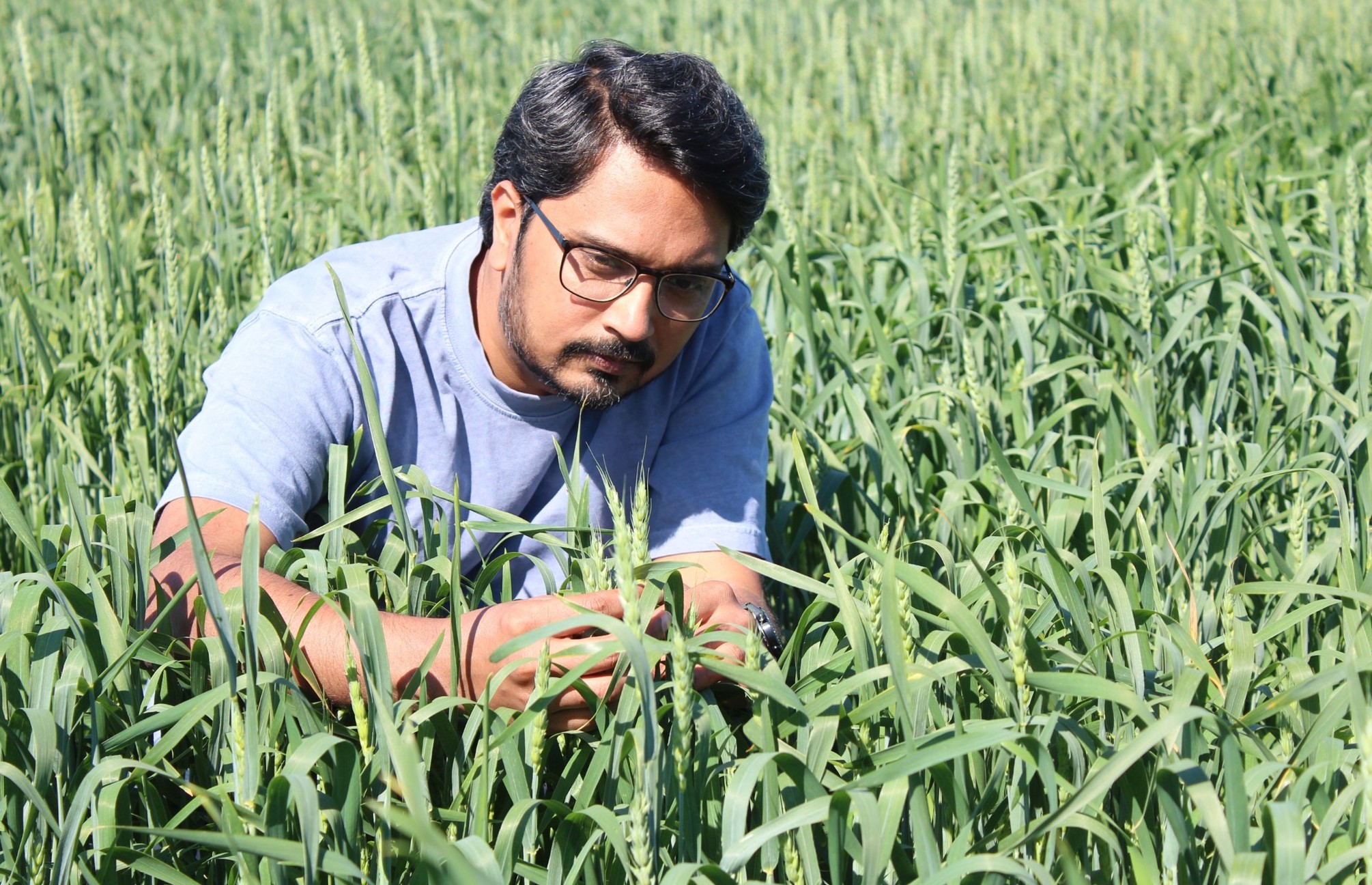
Prof. Chawade leads two research groups
The Chair of Plant Breeding Methodology at the University of Göttingen
and a research group at the Swedish University of Agricultural Sciences (SLU).
Both groups work on statistical, computational, and technological methods for plant breeding,
with complementary expertise, infrastructure, and collaborations in Germany and Sweden.